CHAPTER 03 // QUESTIONS, ANSWERED
Frequently asked, photocopier-honest.
Twelve questions readers actually arrive with, answered from the literature. Slightly warmer register than the research page, same citation discipline.
What is CJC-1295 and how do researchers actually obtain it?
CJC-1295 is a 30-amino-acid synthetic analog of growth hormone-releasing hormone (GHRH). It is manufactured by Fmoc solid-phase peptide synthesis on PEG-polystyrene resin, cleaved, purified by reversed-phase HPLC to typically 95-99% purity, and characterized by electrospray ionization mass spectrometry [20]. The finished material is supplied as a white lyophilized powder in sealed vials, almost always as a trifluoroacetate (TFA) salt [20].
Researchers working in academic or contract-research contexts typically obtain reference-standard CJC-1295 from peptide suppliers that issue full Certificates of Analysis. Outside the academic supply chain, the substance circulates through research-chemical vendors and — until late 2024 — through compounding pharmacy networks. FDA lists CJC-1295's Section 503A nomination as withdrawn, with the safety concerns still in print; the December 4, 2024 PCAC voted against adding its reviewed forms to the 503A Bulks List, and FDA has not stated what that record leaves a compounding pharmacy free to do [16][17]. The substance now occupies an unapproved-new-drug grey zone for human-consumption purposes.
What physical forms of CJC-1295 are studied?
Four physical/chemical forms appear in the literature and on FDA briefing documents: free base, acetate salt, DAC free base, DAC acetate, and DAC trifluoroacetate [16]. DAC (Drug Affinity Complex) refers to the C-terminal maleimidopropionic acid linker that covalently bonds to serum albumin after injection; without that linker the peptide is the non-DAC backbone, also marketed as Modified GRF 1-29 [1][6]. The salt form (acetate vs TFA) refers to the residual counterion left from the synthesis cleavage step.
The FDA's October 2024 PCAC briefing reviewed all five forms (free base, acetate, DAC free base, DAC acetate, DAC trifluoroacetate) and did not recommend any of them for Section 503A Category 1 inclusion [16]. All five are functionally the same molecule from a receptor-binding standpoint, but they differ in net peptide mass per gross vial weight and in solubility characteristics.
Is CJC-1295 a controlled substance under the DEA?
No. CJC-1295 is not a DEA-scheduled controlled substance. It occupies a different regulatory category — an unapproved new drug under the Federal Food, Drug, and Cosmetic Act. The practical implication is that import or sale of CJC-1295 for human consumption violates federal law, but possession for legitimate research purposes is not criminalized under the Controlled Substances Act.
That is a different legal posture than substances scheduled under the CSA (which carry criminal penalties for possession in non-research contexts). It is also a different posture than FDA-approved drugs (which can be lawfully dispensed by prescription). CJC-1295's regulatory limbo — neither scheduled nor approved — is unusual and reflects the Phase 2 trial termination in 2006 and the subsequent absence of any sponsor-funded development pathway [10][16][17].
Can a compounding pharmacy still prepare CJC-1295 in 2025?
Not on any footing FDA has spelled out. CJC-1295 was on the FDA's interim Section 503A Category 2 list in several salt and DAC forms, but that list flagged safety risks and never gave compounders a green light; FDA's page, current as of April 22, 2026, shows it no longer in Category 2 and files it with the withdrawn nominations. FDA files the CJC-1295 nomination as withdrawn, with the safety concerns retained beside it and no withdrawal date supplied [17]. The October 29, 2024 PCAC reviewed CJC-1295 (free base, acetate, DAC free base, DAC acetate, DAC trifluoroacetate) for potential Category 1 inclusion and did not recommend it [16]. The December 4, 2024 PCAC follow-up consolidated public comment and reiterated that available evidence did not support routine 503A compounding access [17].
The upshot: compounding pharmacies do not have a clear regulatory pathway to prepare CJC-1295 as of 2025. Some pharmacies stopped advertising the peptide in late 2024 in response to the rule changes. The FDA briefing documents [16][17] are the primary sources for anyone tracking the regulatory state.
What is the difference between CJC-1295 with DAC and CJC-1295 without DAC?
Same 30-residue peptide backbone (the first 29 residues of human GHRH with four protective substitutions — D-Ala-2, Gln-8, Ala-15, Leu-27) [6]. The DAC version additionally carries a C-terminal maleimidopropionic acid linker that covalently binds the free thiol on Cys34 of serum albumin after injection, anchoring the peptide to a 66 kDa carrier protein [1]. The non-DAC version (also marketed as Modified GRF 1-29 or Mod GRF 1-29) lacks that linker.
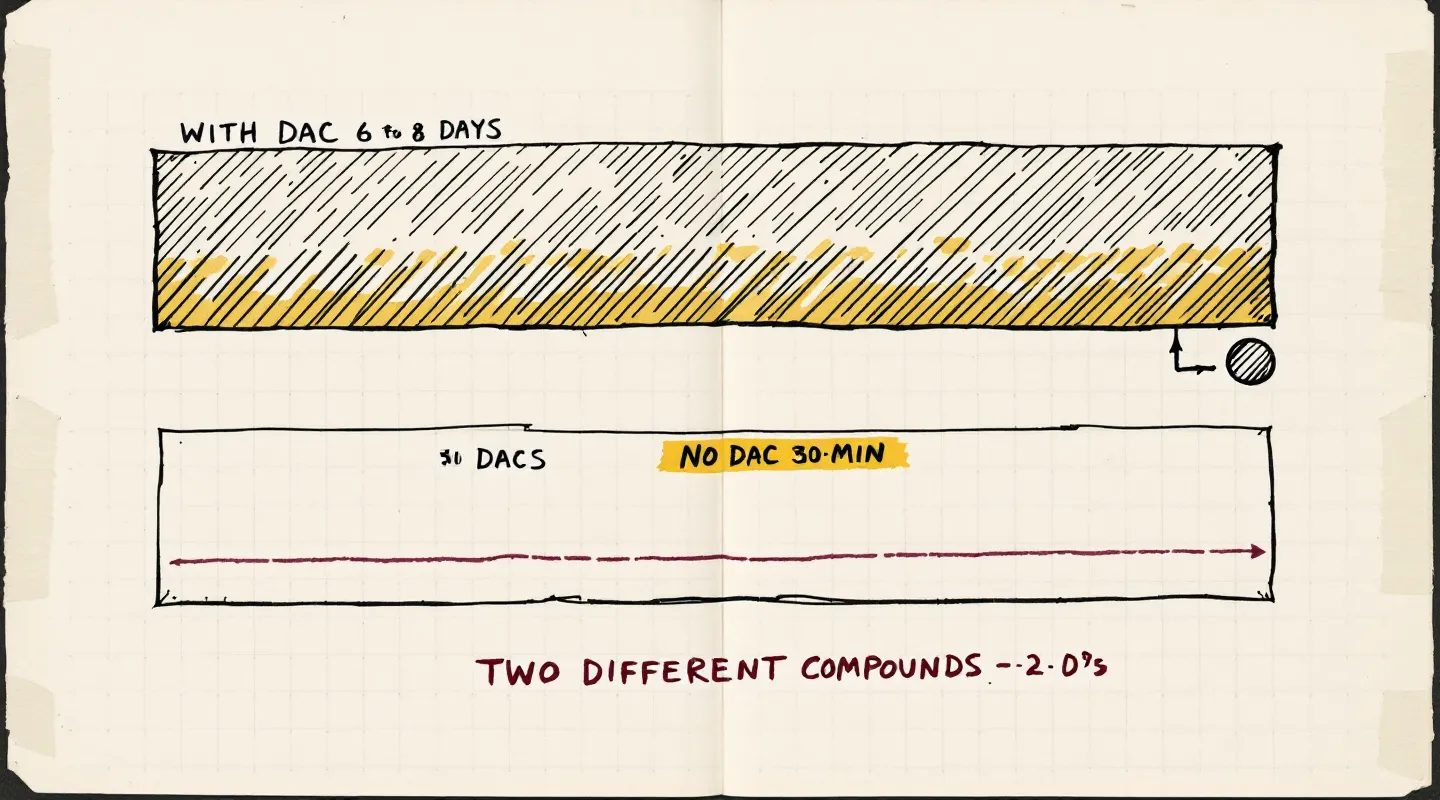
The pharmacokinetic difference is dramatic. CJC-1295 DAC has a mean plasma half-life of 5.8 to 8.1 days in humans [3]. Modified GRF 1-29 has a plasma half-life of approximately 30 minutes [6]. That is roughly a factor of two hundred. The two forms have different appropriate dosing intervals, different durations of effect, and different suitability for any given research question. Confusing them is the single most common factual error in the popular CJC-1295 literature, and it persists because both forms are routinely sold under the CJC-1295 label.
What does a Certificate of Analysis for CJC-1295 actually verify?
A CoA from a reputable peptide supplier typically reports: sequence identity (confirmed by ESI mass spectrometry, with the observed mass matched against the theoretical 3367.9 Da for CJC-1295 DAC), purity (by reversed-phase HPLC, typically reported as area-percent at a specified wavelength), counterion content (residual TFA or acetate as a weight percent), and net peptide weight as a percentage of gross vial weight [20]. Some CoAs also report water content, endotoxin levels, and microbial contamination testing.
What the CoA does not verify: clinical safety, suitability for any specific use, sterility under any conditions other than the immediate post-manufacture state, or stability after the vial is opened. The Henninge 2010 paper documented that a seized illicit CJC-1295 preparation, when analyzed by LC-HRMS/MS, did contain the labeled peptide [8] — a useful data point, but a single forensic confirmation does not extrapolate to any other source. Without an actual CoA from the actual batch, there is no practical way to verify net peptide content.
Why is CJC-1295 so often supplied as a blend with ipamorelin?
Mechanistic synergy. Bowers and colleagues 1990 demonstrated that combined administration of a GHRH agonist with a ghrelin-receptor agonist produces a GH secretory response several-fold larger than either agent alone [11]. CJC-1295 binds the GHRH receptor; ipamorelin binds the ghrelin receptor (GHS-R1a). Activating both pathways simultaneously produces greater-than-additive GH release [11].
Ipamorelin in particular gets paired with CJC-1295 because it has a more favorable off-target profile than older GHRPs — less stimulation of cortisol and prolactin than GHRP-2 or GHRP-6. The 1:1 mg/mg blend is the most common research-chemical format. No peer-reviewed RCT has evaluated the specific CJC-1295 + ipamorelin combination in humans; the rationale is mechanistic extrapolation from foundational dual-receptor work in the 1990s [11].
What does the published human research literature show about CJC-1295 pharmacokinetics?
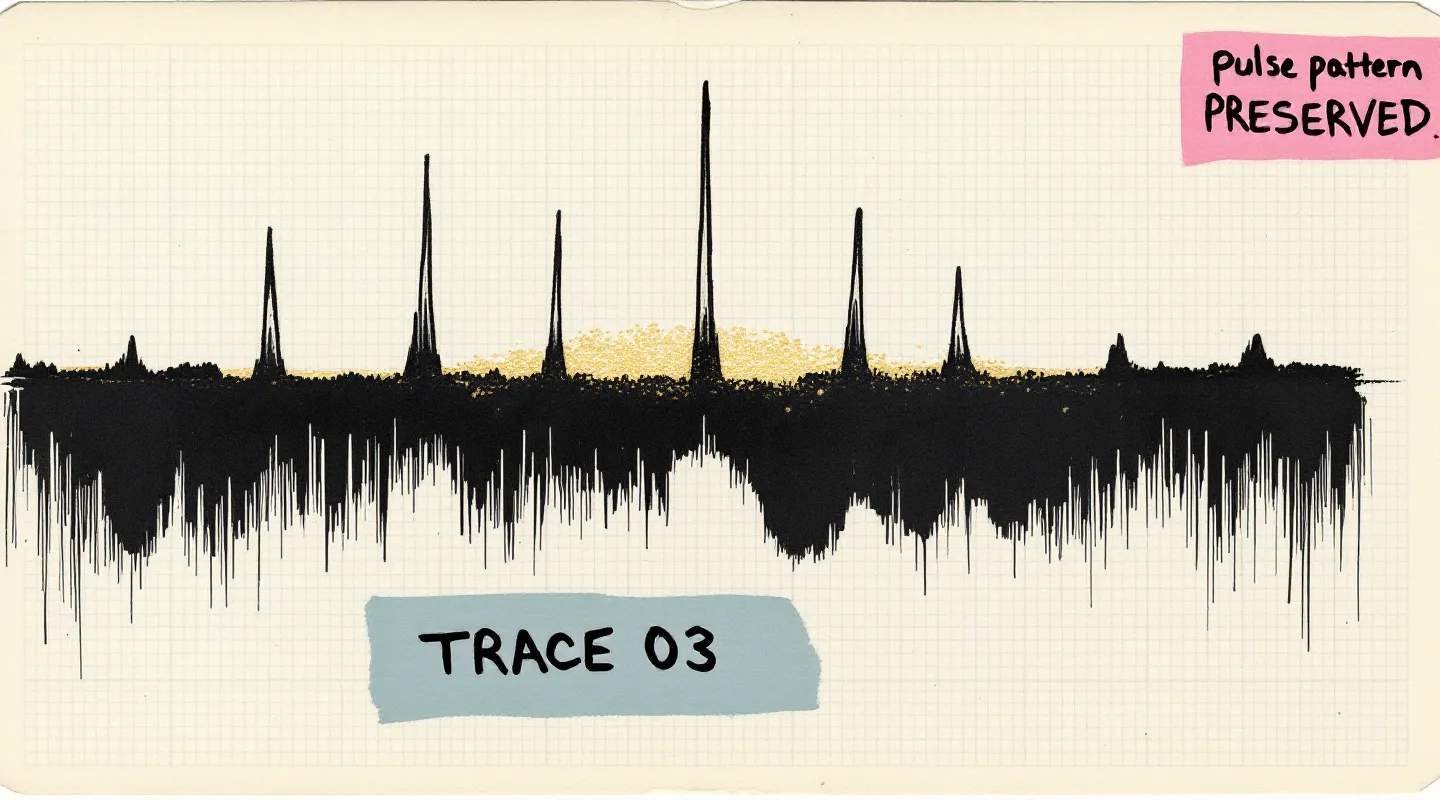
One Phase 1 study, run twice over. The Teichman 2006 paper in JCEM reported that single subcutaneous doses of 30, 60, 125, or 250 μg/kg in healthy adult volunteers produced mean plasma GH increases of two- to ten-fold over baseline for at least six days [2]. IGF-1 increased 1.5- to three-fold for nine to eleven days. Multi-dose cohorts maintained IGF-1 elevation for up to twenty-eight days [2]. The Ionescu and Frohman 2006 substudy of the same cohort documented that pulsatile GH secretion was preserved during the multi-day continuous receptor stimulation — single doses raised trough GH approximately 7.5-fold while keeping the natural pulse pattern intact [4].
That is the full peer-reviewed human PK record. There is no published Phase 2 efficacy data. The 192-participant Phase 2 HIV-lipodystrophy trial (NCT00267527) was terminated in 2006 [10]. Subsequent human exposure to CJC-1295 has occurred outside the IND pathway and has not generated peer-reviewed clinical-trial data.
What is the half-life of CJC-1295 in humans?
The DAC variant has a mean plasma half-life of 5.8 to 8.1 days in healthy adult humans, measured across the Teichman 2006 dose cohorts [3]. That is the longest measured plasma half-life of any published GHRH analog [3]. The mechanism is the covalent peptide-albumin bioconjugate — once CJC-1295's reactive maleimide bonds to serum albumin Cys34, the peptide rides the albumin carrier through the circulation, shielded from renal filtration (the bioconjugate is too large to be cleared by the kidney) and from most peptidase exposure [1][3].
The non-DAC modified GRF(1-29) variant has a plasma half-life of approximately 30 minutes — roughly four times longer than native GHRH (~7 minutes), attributable to the four protective amino-acid substitutions resisting DPP-4 cleavage and oxidation [6]. The DAC and non-DAC forms are pharmacokinetically distinct compounds despite sharing the underlying backbone.
What is CJC-1295's status under WADA anti-doping rules?
Prohibited at all times — both in- and out-of-competition. CJC-1295 is explicitly listed under Section S2 (Peptide Hormones, Growth Factors, Related Substances, and Mimetics) of the 2025 World Anti-Doping Code International Standard Prohibited List [19]. Use by any WADA-tested athlete constitutes an Anti-Doping Rule Violation regardless of how the substance was obtained or what form it took.
Detection methods have caught up. The Timms 2019 immuno-PCR screen detects CJC-1295 in equine plasma at sub-ng/mL concentrations [11], and the companion LC-MS/MS confirmation method detects down to 180 pg/mL [12]. The 2024 Thomas paper validated nano-LC quadrupole/orbitrap mass spectrometry methods for screening CJC-1295 and related GHRH analogs in athlete urine in compliance with WADA technical requirements [13]. Anyone subject to WADA testing should treat CJC-1295 as detectable to the limit of contemporary mass spectrometry.
Why did the Phase 2 CJC-1295 clinical trial stop in 2006?
The Phase 2 trial of CJC-1295 in HIV-associated visceral adiposity (NCT00267527) enrolled 192 participants on a weekly subcutaneous regimen [10]. In October 2006, a participant died from an acute coronary event approximately two hours after the eleventh weekly dose. The trial was terminated. An independent review attributed the event to pre-existing undiagnosed coronary artery disease and judged the death unrelated to study drug [10].
The trial was never restarted, no primary endpoint data were published, and no sponsor-funded clinical development of CJC-1295 has occurred since. The independent review's unrelated to study drug finding is part of the public record [10], and the published evidence does not support a direct causal link between CJC-1295 and the cardiovascular event. But the program never resumed, and the long-term human safety record has remained correspondingly thin — there are no multi-year human safety data on CJC-1295 in any form.
What documented side effects have been reported in the human exposure literature?
The Teichman 2006 Phase 1 record and subsequent observational documentation note flushing (typically resolving within ten to twenty minutes after dose), transient dizziness, and injection-site reactions [10]. None of these are uncommon for any subcutaneous peptide injection. The Van Hout 2016 netnographic analysis of online forum self-reports identified similar acute symptoms in non-clinical use, plus patterns of unsupervised long-term use and information-seeking behavior that the authors flagged as public-health concerns [9].
Long-term effects of sustained supraphysiological GH/IGF-1 elevation — insulin resistance, edema, joint pain, theoretical neoplasia risk via IGF-1 — are not well characterized specifically for CJC-1295 because the multi-year human exposure data needed to characterize them do not exist. The Phase 2 trial that would have generated those data was the 2006 trial that stopped [10].